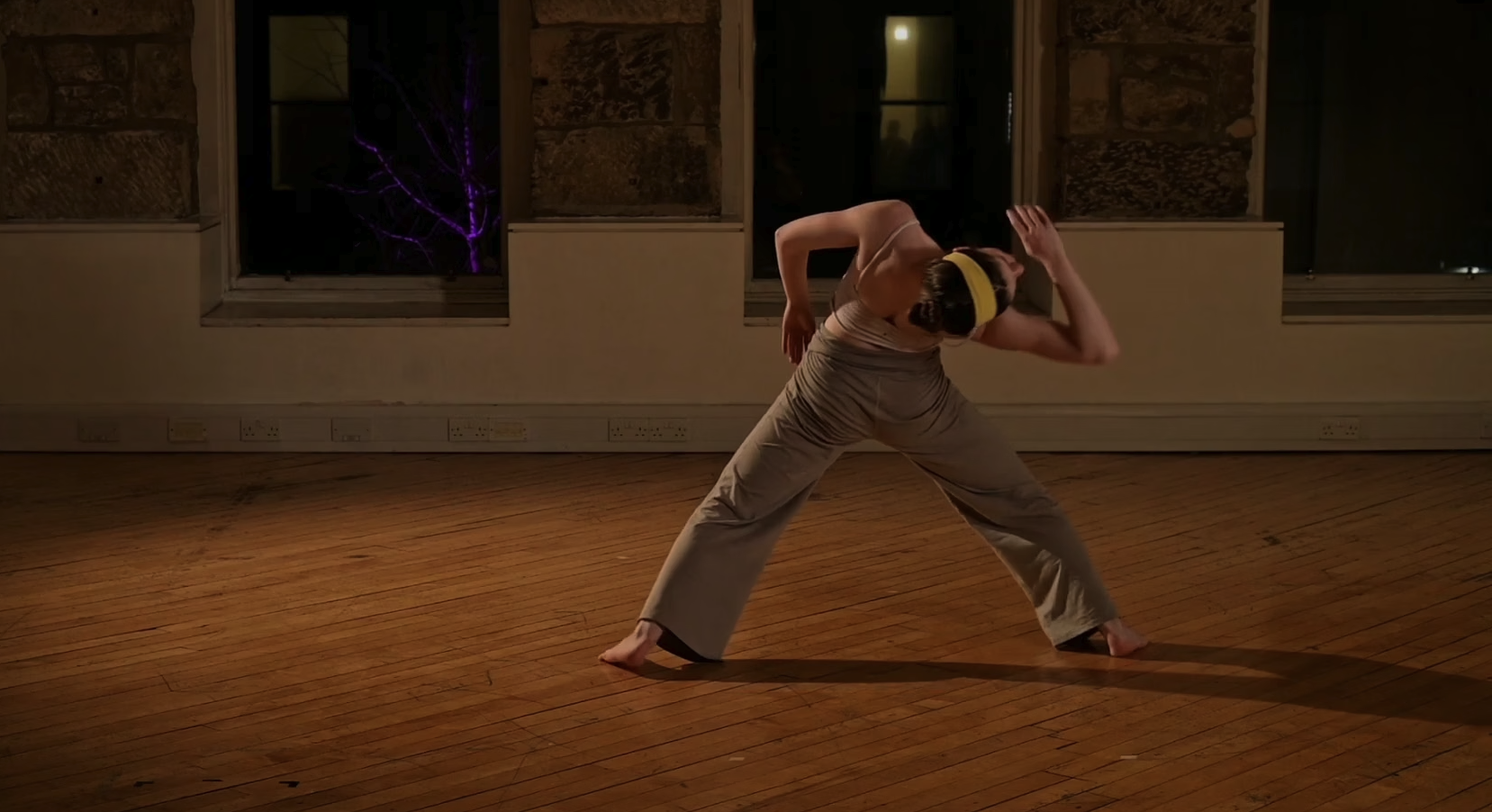
Sonified Body transforms dance into sound using AI. It creates a personalized body-computer interface that responds to human movement holistically through machine learning, forming part of research into non-symbolic human-computer interaction.
Created by Tim Murray-Browne and Panagiotis Tigas.
The Approach
Rather than imposing designer preconceptions, the system derives interaction from the dancer's existing movement vocabulary. The project emphasizes embodied thinking: intuition, context, resonance, ambiguity and fluidity over abstract interface manipulation.
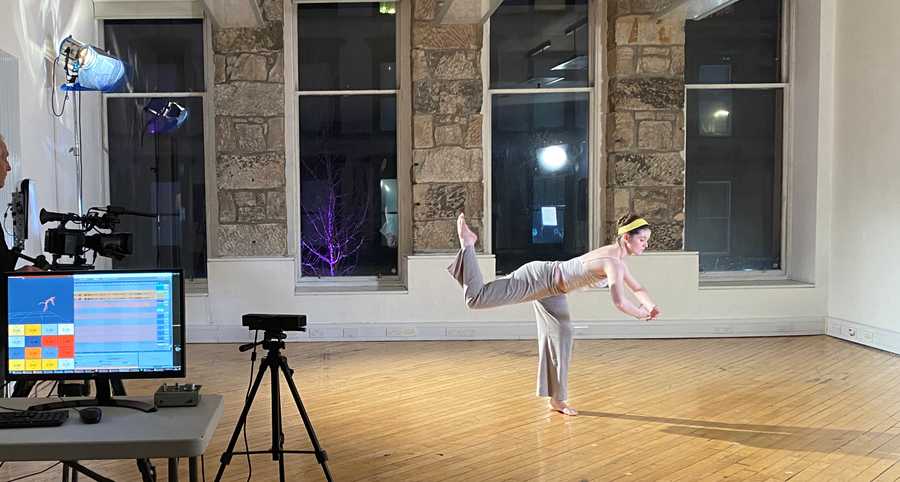
The system employs a Variational Autoencoder trained on hours of free creative movement from a single person. This generates a 16-dimensional, entangled representation where any body movement can affect every sound parameter. The interface is deliberately "overfit" to one individual, creating a bespoke interaction language rather than a one-size-fits-all system.
Dance and musical improvisation are innate forms of human expression unmet by existing paradigms of interface design. Our proof-of-concept translates movement into sound using an interface trained on Murray-Browne's vocabulary of movement.
Events & Exhibitions
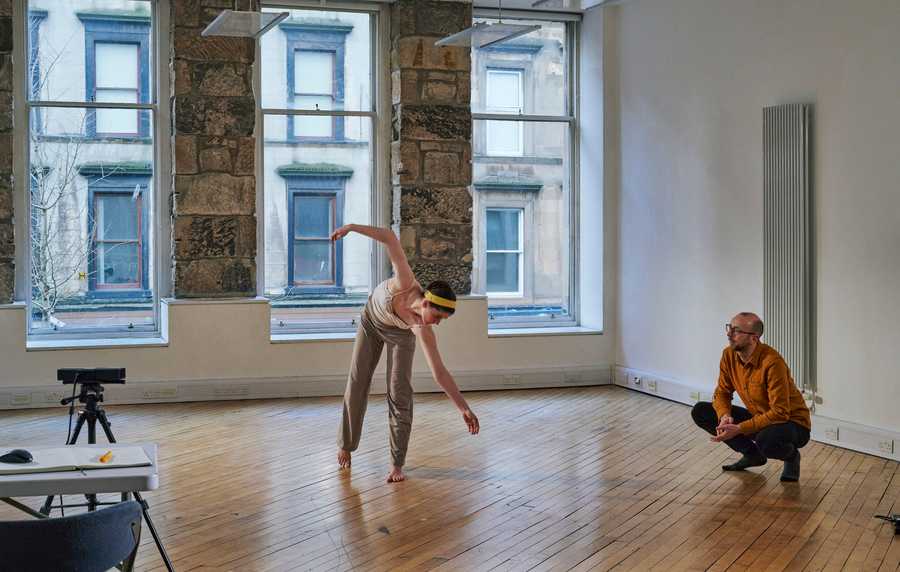
- Artistic residency at Centre for Contemporary Arts, Glasgow (January 2022)
- Latent Voyage interactive installation version (CCA Glasgow, January 2022)
- Research presentation at Present Futures festival (February 2020)
Credits
- Collaborator: Tim Murray-Browne
- Dancers: Catriona Robertson, Adilso Machado, Divine Tasinda
- Photographer: Alan Paterson
- Mentor: Ghislaine Boddington (body>data>space)